
¡Te abrimos las puertas!
Jornadas de Puertas Abiertas presenciales y online
Te presentamos el Grado, te enseñamos las instalaciones y podrás charlar con profesores y estudiantes de BCC que nos acompañarán durante las jornadas. Inscríbete


Imagine, design and transform the future of wine and drinks by combining science, technology, innovation and business.
Imagine crafting a wine that expresses the identity of a region, creating an alcohol-free drink for a new generation of consumers, helping a winery adapt to climate change, or taking a beverage to markets such as Tokyo, Mexico City or Seoul.
The world of wine and beverages is changing. It needs people who can combine science, technology, innovation and business to respond to new consumption habits, protect natural resources, promote more sustainable ways of making beverages, and open up new opportunities for people and regions.
Because you are not here simply to learn how wine and drinks are made. You are here to join a new generation that will transform one of the world’s most exciting, dynamic and international sectors.
Few sectors connect tradition, innovation, gastronomy, business, place and international reach so naturally.
This constantly evolving ecosystem calls for new ideas, new projects and new profiles. It brings together the tradition of a century-old winery, a new generation of fermented beverages, global brands, technology applied in the field, data analysis and entrepreneurship.
The sector needs people who can understand what is happening, connect different areas of knowledge and turn today’s challenges into tomorrow’s opportunities. People who are ready to develop solutions and open up new paths where others see only obstacles.
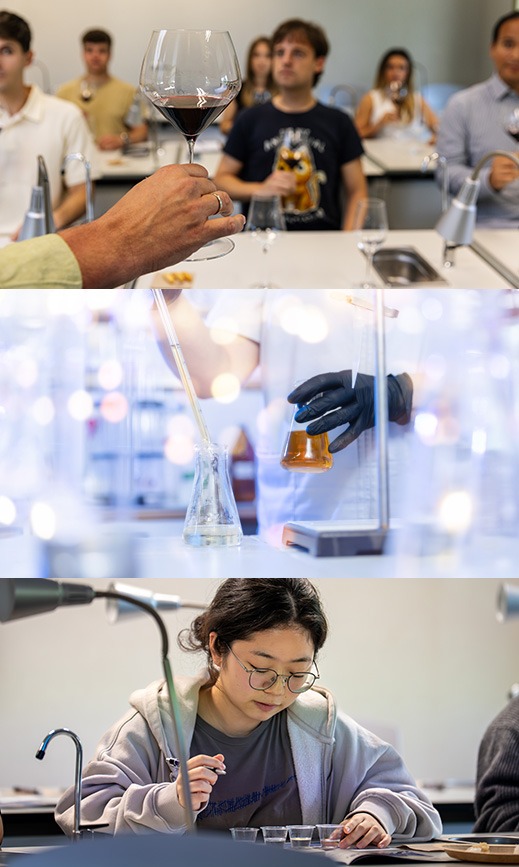
Become someone who will design the future of wine and drinks
There are places where wine and drinks are studied. And there are places where you can engage with them, understand them and build their future.
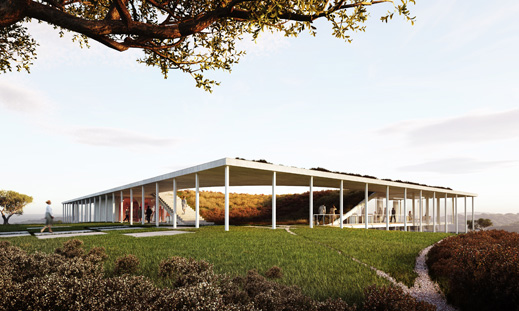
You will study in Rioja Alavesa, an exceptional region in the world of wine, within the Rioja Qualified Designation of Origin. Here, wine forms part of the landscape, culture and identity of its people. It is an outstanding setting in which to understand wine from its origins and connect with some of the most important wine regions in Spain and the world. You will also study in Vitoria-Gasteiz, an innovation environment where new technologies, products, projects and business models come together across the beverage universe. Two complementary locations that will enable you to learn from the origins of wine and beverages to what comes next.
You will do so at EDA Drinks & Wine Campus, part of the Basque Culinary Center ecosystem: an environment that brings together students, professionals, researchers, wineries, start-ups and international experts to advance the future of wine and drinks.
Ideas are tested here. Projects take shape. Learning happens in direct contact with the realities of the sector. EDA is more than a campus: it is the place from which you can become part of one of the sectors with the greatest capacity for innovation and transformation.
Two spaces designed to put knowledge into practice and discover the sector from within. Two locations with high-level facilities, technology and equipment, where you can work with the same processes, tools and challenges you will encounter in your professional future.
You will learn in direct contact with the vineyard, the region and the winemaking process. A unique setting in which to understand how wines are born, how they evolve and how each decision influences the final result. Because to imagine the future of wine, you must first understand where it comes from.
You will learn in a region where wine is more than an economic activity. It is culture, landscape, identity and a way of understanding the world.
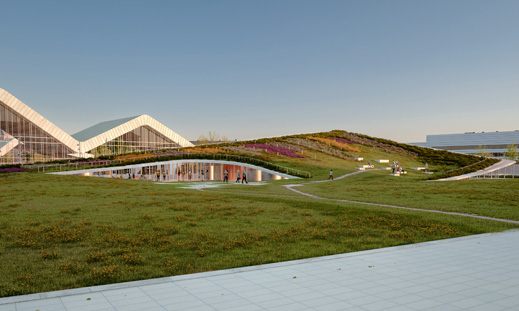
You will explore the entire beverage universe in a space designed to experiment, develop and validate new proposals. From fermented and alcohol-free drinks to new products, technologies and ways of enjoying drinks that respond to the trends shaping the sector.
They are more than facilities. They are places where you learn from reality.
Vineyard
Understand how the region, climate and vineyard management influence the identity and quality of a wine.
Pilot plant
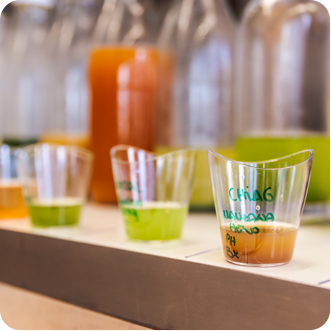
Develop prototypes, test real beverage-making processes and turn an idea into a drink.
Laboratories
Analyse, research and experiment with the knowledge and technologies transforming the world of wine and drinks.
Tasting room
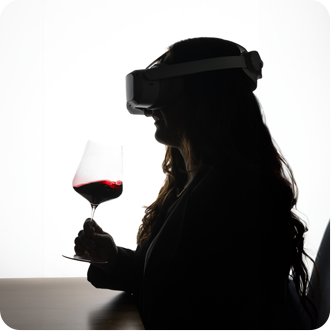
Train your senses, develop sound judgement and learn to evaluate beverages from technical and sensory perspectives.
Wine Bar & Drinks Bar
Explore how beverages connect with gastronomy, consumers and new ways of enjoying them.
Some processes, techniques, preparations and projects are best understood by doing them and putting them into practice.
From the first year, you will experiment, make decisions and work on challenges connected to the realities of wine and drinks. You will make wine, beer and cider; develop new beverages; analyse results; and learn to turn an idea into a proposal that can respond to the needs of the sector and of business.
You will work in the laboratory, pilot plant, vineyard, tasting room and Wine & Drinks Bars. These are spaces where you will test your knowledge, validate solutions and discover that some of the best ideas emerge when you have the opportunity to try them out.
All of this takes place in a learning environment where professionals, students, entrepreneurs and researchers from different countries and cultures come together to enrich knowledge and learning.
Your education goes far beyond the campus. Alongside knowledge and practical learning, you will build relationships with professionals, companies, researchers and entrepreneurs who can support you throughout your career.
From the first year, you will have the opportunity to engage with the professional realities of the sector through placements in wineries, beverage companies, laboratories, technology centres and specialist organisations. An exceptional opportunity to discover different areas of the sector, understand how professionals work and begin building your own path.
You will be able to complete placements during all four years of the degree. They are optional in years 1, 2 and 3, allowing you to gain up to 55 ECTS credits through professional practice. In year 4, you will complete a compulsory placement and an applied Final Degree Project within a company, tackling real challenges alongside organisations in the sector.
You will also have opportunities to study internationally and discover different approaches to wine and beverages in some of the world’s most dynamic ecosystems.
Because your professional future does not begin when you finish your degree. It begins when you have the opportunity to put it to the test.
The Bachelor’s Degree in Wine and Drinks Science, Technology and Innovation, awarded by Mondragon Unibertsitatea, is aligned with the European Higher Education Area.
The degree aims to educate highly qualified professionals capable of advancing the comprehensive transformation of the wine sector. They will develop and implement technological, commercial and organisational innovations to address critical challenges such as extreme climate change, evolving alcohol consumption habits, the transition towards sustainable and circular-economy models, and innovation across other beverage categories.
In other words, the degree will educate professionals capable of advancing the evolution of wine and drinks through science, technology, innovation and business.
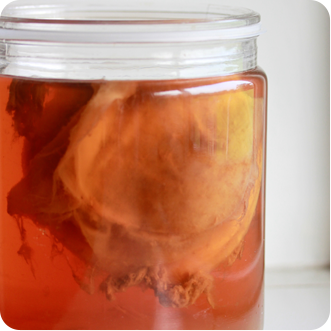
You create from the start. You begin with the grape harvest.
Your first contact with the sector will not come at the end of the degree. It will happen almost from day one.
Over the four years of the degree, you will progress from discovering the universe of wine and drinks to developing your own projects and responding to real challenges in the sector. You will begin by making and understanding the foundations of wine and drinks. You will then experiment with new techniques, processes and technologies; create innovative products, projects and proposals; and finally take your ideas into the professional world through placements and real projects. This journey is designed to turn curiosity into knowledge, knowledge into solutions, and solutions into opportunities for the future.
The curriculum is structured over four years, with 60 ECTS credits per year. Classes are taught in Spanish, with some subjects taught in English.
First semester
| - Biology | ECTS: 6 |
| - Microbiology | ECTS: 6 |
| - Chemistry | ECTS: 6 |
| - Plant Physiology | ECTS: 6 |
| - Soil and Climate | ECTS: 6 |
Second semester
| - Basic Laboratory Operations | ECTS: 7 |
| - Safety and Hygiene in Viticulture and Oenology | ECTS: 3 |
| - Applied Mathematics and Statistics | ECTS: 6 |
| - Economics | ECTS: 6 |
| - Fundamentals of Gastronomy | ECTS: 3 |
Electives:
| - Climate Change Adaptation in the Wine and Drinks Sector | ECTS: 5 |
| - Placements in Wine Companies | ECTS: 5 |
First semester
| - Oenology | ECTS: 6 |
| - Physics | ECTS: 6 |
| - Viticulture | ECTS: 6 |
| - Wine Regions of the World and Sensory Analysis | ECTS: 4 |
Electives:
| - Biodiversity Management | ECTS: 8 |
| - Company Placement in Viticulture and Oenology | ECTS: 8 |
Second semester
| - Beverage Making | ECTS: 6 |
| - New Technologies Applied to Viticulture and Oenology | ECTS: 5 |
| - Technology and Processes in the Beverage Sector | ECTS: 6 |
| - Business | ECTS: 7 |
| - Biochemistry | ECTS: 6 |
First semester
| - Innovative Beverage Development I | ECTS: 9 |
| - Advanced Technologies Applied to Beverages | ECTS: 6 |
| - Wine and Beverage Marketing and Sales | ECTS: 6 |
| - Wine and Beverage Culture and Anthropology | ECTS: 6 |
| - Wine and Beverage Service and Management | ECTS: 3 |
Second semester
| - Entrepreneurship and Business Development | ECTS: 8 |
| - Innovative Techniques in Gastronomy | ECTS: 3 |
| - Logistics and Distribution | ECTS: 7 |
Electives:
| - Recovery and Valorisation of By-products and Waste in the Beverage Sector | ECTS: 12 |
| - Start-ups and Financing Innovation in Wine and Beverages | ECTS: 12 |
| - Placement in the Beverage Sector | ECTS: 12 |
First semester
| - Innovative Beverage Development II | ECTS: 10 |
| - Quality, Sustainability and Circular Economy Management | ECTS: 6 |
| - Data Analysis and Decision-making | ECTS: 4 |
| - Health and Nutrition | ECTS: 4 |
Electives:
| - Packaging Innovation in the Beverage Sector | ECTS: 6 |
| - Sommelier Studies and Gastronomic Culture | ECTS: 6 |
| - Advanced Fermentation | ECTS: 6 |
Second semester
| - External Placement | ECTS: 18 |
| - Final Degree Project | ECTS: 12 |
The degree was designed together with the people building the present and future of the sector. Its development involved dozens of professionals, Spanish and international wineries, sector associations, brewers’ associations, regulatory councils, technology centres, researchers, entrepreneurs and prominent companies connected to the world of wine and drinks. Through meetings, working groups, visits, review sessions and collaborative processes, they contributed knowledge and a forward-looking perspective to build an education connected to reality. This collaboration is structured and strengthened through the International Expert Committee and the Winery Council of EDA Drinks & Wine Campus.
The sector has played a part in building the degree. Wineries, companies from across the beverage sector – including beer, spirits, cider and NOLO – as well as professionals and internationally recognised institutions actively collaborate in the development of EDA. Their involvement helps ensure that the education offered responds to the real challenges of today and tomorrow.











You may imagine your future as an oenologist, master brewer, innovation manager, product development director, researcher or entrepreneur. Perhaps you will develop new beverages, coordinate international projects, create your own brand or help advance some of the most important companies in the sector. You may take over a family winery and prepare it to meet the challenges of a new generation.
Whatever path you choose, you will develop a distinctive profile that the sector needs: a combination of science, beverage making, technology and business.
To begin your studies, you must provide evidence that you meet the legal requirements for university entry when the degree starts. This means that you must have completed one of the following:
The fee for the 2027-2028 academic year is EUR 11,903.
Payment options:
*If you choose payment in ten monthly instalments, EUR 1,709.01 will be payable at enrolment.


