NEXT EDITION: SEPTEMBER 2027
Pre-registration is now open here.
Lead the new era of the sommelier profession: innovation, experience and a strategic vision of the liquid world
The sommelier profession is evolving. New consumers, new beverages, the rise of NoLo and the need to create distinctive experiences demand a more innovative, strategic approach, connected to the beverage business.
The Master’s Degree in the Sommelier Profession and Innovation in the Liquid World promotes this new role. It teaches you how to design high-value beverage propositions, lead innovative projects and communicate, manage and develop experiences that make a difference in haute cuisine and contemporary dining.
Why will this Master´s Degree transform your professional background?
- A New Sommelier Profession, A Global Vision: Master the contemporary world of beverages: wine, new beverage categories, NoLo, mixology, sustainability and innovation applied to modern gastronomy.
- Innovation in Liquid Proposals and the Strategic Role of the Sommelier: Learn to design unique beverage propositions, communicate with impact and take on strategic roles beyond front-of-house service, incorporating a management perspective.
- Learn from the Best: Train with a leading faculty of professionals from haute cuisine, liquid innovation and specialised consultancies who are currently at the forefront of the sector.
- Hybrid and practical methodolohy: Combine online learning with an experience-based methodology based on technical tastings, real-life case studies and the development of projects related to the professional sphere.
- Stand out with international recognision: Boost your CV with the official WSET® Level 3 Award in Wines certification.
PRACTICAL INFORMATION
- Start date: September 2027
- Language: Spanish
- Duration: 60 ECTS
- 20 available slots
- Blended learning
- Location: Location: in-person residential period at Basque Culinary Center
- Academic period: September 2027 to March 2028
- Online period: September 2027 to January 2028
- In-person period: February to March 2028 (two months)
- In-person classes: Monday to Thursday, from 14:30 to 20:30h (CEST)
- Internship period: April to July 2028
- Type of degree: University-specific Degree from Mondragón University, delivered by Basque Culinary Center
- Degree: Professional Master in Sommelier Studies and Wine Marketing
- For enquiries and more information, please complete the form by clicking here
MASTER'S OBJECTIVES
- Solid professional foundations in the sommelier profession: Master service, cellar management, sensory analysis and the classic fundamentals of the profession with a modern and professional approach.
- A global vision of the contemporary liquid world: Understand wines, spirits, fermented beverages, NoLo beverages and new categories, appreciating their gastronomic, cultural and commercial value. Includes preparation for the WSET® Level 3 Award in Wines.
- Innovation and design of beverage propositions: Learn to create your own beverages, unique drinks lists and liquid experiences in line with the identity of the gastronomic project.
- Management and profitability of the beverages department: Plan purchasing, control inventories, incorporate digital tools and make decisions based on economic and strategic criteria.
- Experience, communication and leadership: Design memorable pairings and harmonies, communicate with impact and take on a strategic role as a sommelier in highly demanding environments.
MASTER´S PROGRAMME
Having a university degree is not a requirement to enrol in this master’s programme; however, holding one may influence the admission process and the type of qualification you receive upon completion.
After successfully completing the master’s, you will be awarded the Master’s Degree in Sommelier Studies and Innovation in the Liquid World by Basque Culinary Center.
If you hold a university degree (Bachelor’s, Licentiate, Engineering or Diploma, or an equivalent qualification), you will also be eligible to obtain the Master’s Degree in Continuing Education, issued by Mondragon University.
If you do not have a university degree but wish to obtain the Continuing Education qualification, you may indicate this during the admission process to take part in the competency recognition process, which assesses your professional experience and background.
If you successfully complete this process, you will be eligible for the Master’s Degree in Continuing Education once the programme is finished.
If not, you will still be able to complete the master’s, but the qualification awarded will be a University Extension Diploma.
PROFESSIONAL OPPORTUNITIES
1. Sommelier in haute cuisine and fine dining restaurants
2. Wine cellar management and beverage manager
3. Beverage specialist for F&B departments
4. Beverage consultancy and advisory services
5. Development of beverage experiences and food and wine events
6. Specialised communication
7. Entrepreneurship in the beverage sector
LISTEN TO/READ ABOUT OUR ALUMNI
Leticia Sanz Alonso – Bodega Javier Sanz Viticultor
My journey began in various departments of the winery, which allowed me to understand the versatility and challenges of running a family business. What I value most about the Master’s program is the strong networking with professionals in the sector, the hands-on learning during trips to leading wine regions, and the chance to experience Donosti’s rich wine culture. This Master’s has boosted my professional growth and has been a truly transformative experience—one I would definitely choose again.
REASONS TO TAKE THE MASTER’S DEGREE
1. Innovative and multidisciplinary vision of the sommelier profession
The master’s degree responds directly to the sector’s transformation, moving beyond a traditional focus on wines and service. It champions a contemporary approach to sommelier profession that encompasses the entire world of beverages, innovation in the creation of beverages and experiences, comprehensive management, as well as sensory analysis that is both scientific and perceptive.
2. A 360º approach to the liquid world
A vision beyond wine: it encompasses spirits, fermented beverages, NoLo, ciders, coffees, infusions, waters, vermouths and more, incorporating their processes, culture, tastings and visits. This broad and cross-cutting approach strengthens its pioneering nature.
3. Hybrid format designed for professionals
Its blended learning approach (five months online and two months in person) allows you to combine training with your professional and personal activities.
4. Integration of the WSET 3 certification
The master’s degree includes the materials, training and exam fees for the official WSET 3® Award in Wines, which is widely recognised internationally, enhancing employability and adding value to the main qualification.
5. Learning by doing methodology
It includes practical workshops, real challenges, experience design, visits to production areas, tastings, pairings and capstone projects. This experienced-based methodology reinforces applied learning and fosters key skills for the job market.
6. High-level international faculty
The master’s will feature a prestigious academic and professional faculty that connects students with the sector’s cutting edge: top sommeliers, beverage development experts, Masters of Wine and much more.
7. Develop and update your professional profile
The master’s prepares you for multiple career paths, including liquid experience creators, haute cuisine sommeliers, cellar managers, strategic advisors or beverage entrepreneurs. It responds to the demand for new professionals who are more global and versatile.
8. Consolidated experience and recognition of BCC
This new master’s degree is rooted in ten years of training in the sommelier profession at BCC. It offers institutional strength, international recognition and the know-how of its professional and academic community as a guarantee of the quality and reputation of the qualification.
9. Strategic link with EDA, the future Drink & Wine Campus
The master’s degree is integrated and connected with the future new EDA Drink & Wine Campus, designed as a centre of excellence for beverages and wine. This connection will allow participants to place themselves at the centre of a developing ecosystem that will bring together innovation, applied research and an international advisory board of wine and beverage experts, establishing the programme as a point of reference in the liquid world.
10. Practical application in a real professional environment
The combination of curricular work placements in real environments and the development of the Master’s Final Project allows you to put knowledge into practice, experiment with current challenges in the sector and conclude your studies with your own innovative proposal. This journey creates a standout professional profile, ready to lead in a constantly evolving market.
+1. Professional development and access to leadership positions
The master’s degree is designed to accelerate the professional development of participants, facilitating access to roles of greater responsibility in the sommelier and beverage sector. Thanks to its strategic approach, its network of contacts and its direct connection with the professional environment — through work placements, visits and industry-active lecturers — the programme enables participants to apply for advanced positions in haute cuisine, hotel groups, consulting or entrepreneurship, strengthening their profiles as professionals prepared to lead change in the sector.
WHO THE COURSE IS FOR
The master’s degree is designed for professionals in the gastronomy and beverage sector who seek to lead the transformation of the world of beverages through excellence, specialised knowledge and innovation.
It is mainly aimed at the following professional profiles:
- Sommeliers and professionals in wine and other beverages who wish to evolve or expand their specialisation.
Sommeliers who are active or in the process of professionalisation and want to update their knowledge, explore new trends and lead innovative propositions in restaurants, wineries or specialised shops.
- Professionals responsible for gastronomic experiences with a focus on beverages or related fields.
Maîtres, front-of-house managers, chefs and food & beverage department heads who wish to integrate wine and other beverages strategically as a high-value strategic component of the gastronomic experience.
- Professionals in the beverage sector seeking to set themselves apart and innovate.
Mixologists, baristas, brand ambassadors, consultants and other specialists in the beverage field who wish to acquire advanced tools to design, communicate and commercialise innovative propositions in the HoReCa channel.
- Entrepreneurs and developers of new concepts in gastronomy and beverages.
People with their own projects or projects in development who seek to create or expand businesses linked to the sommelier profession, cocktail making or specialised distribution, with a contemporary, sustainable and experience-based approach.
- Graduates in gastronomy, hospitality or other related disciplines who wish to develop their careers in the liquid world.
In addition to the main target profiles, the master’s degree is also particularly enriching for professionals linked to the dining and beverage sector who do not perform functions directly related to the sommelier profession, but can benefit significantly from specialised training in liquid innovation.
Unsure whether your background is a good fit for the master’s?
If you have any doubts about whether your background is a good fit for the Master’s, please contact us so that we can assess your profile and provide you with personalised information.
STUDY PROGRAMME
Over the course, worth 60 ECTS, students acquire broad, in-depth and up-to-date knowledge of the world of beverages, develop specific skills in sensory analysis, management, beverage creation, communication and leadership, and develop the technical expertise required to perform as a sommelier in high-pressure environments. Learning is complemented by real-world placements, specialised workshops and professional visits to production areas and centres, integrating innovation, sustainability and a 360º strategic perspective as cross-cutting themes.
Module 1: Sensory analysis and tasting refinement
This module explores the consumer’s sensory experience to understand their drinking preferences and delves into the fundamentals and methodologies of sensory analysis to interpret, describe and evaluate beverages. It also immerses you in different types of tastings, expanding your perceptive abilities through the senses. Lastly, it introduces specific vocabulary and encourages you to create your own language to capture the entire sensory experience.
- Sensory analysis methodology and consumer studies
- Scientific foundations of sensory behaviour
- Tasting systems and techniques
- Tasting methodology
- Refined tasting
- Sensory calibration and development of tasting competences
- Practical calibration exercises
- Development of your own tasting system
- Building a sensory vocabulary
Module 2: The contemporary liquid world
This module is entirely dedicated to the contemporary world of beverages. From a fresh perspective on beverages, through the raw materials they are made from and the techniques used in their production, it breaks down their composition and main characteristics one by one. It covers history, production, preparation and the various types, among other aspects. These elements are explored from a theoretical and practical perspective through multiple tastings and visits.
This module offers a comprehensive, holistic and extensive overview of the entire liquid world linked to gastronomy today.
- Raw materials: fruits I, grapes
- Vine cultivation (viticulture)
- Wine (fermented)
- Wine distillates (cognac, armagnac, brandy, etc.)
- Grape distillates (grappa, orujo, etc.)
- Raw materials: fruits II, apples and others
- Apples (cider and calvados)
- Pears (pear cider and eau-de-vie)
- Plums (artisan beverages and slivovitz)
- Cherries (kriek and kirsch)
- Stone fruits and dried fruits (apricot, fig, quince, etc.)
- Tropical fruits (pineapple, guava, mango, passion fruit, etc.)
- Other fruits (blackcurrant, raspberry, blueberry, etc.)
- Cereal cultivation and processing (barley, wheat, rye, rice, etc.)
- Cereal fermentations (beer and sake)
- Cereal distillates (vodka, gin, whisky, etc.)
- Cereal macerations and NoLo options
- Raw materials: Plants
- Cultivation and processing of useful plants (agave, cane, cassava, etc.)
- Fermented plant-based beverages (pulque and cauim)
- Distilled plant-based beverages (rum, cachaça, tequila, etc.)
- NoLo plant-based beverages (coffee, tea, infusions and kombucha)
- Other liquid categories
- Gourmet fresh juices
Module 3: The role of the sommelier - creation and evolution
This module offers a comprehensive and up-to-date vision of the sommelier’s role. From its historical origins to its function in contemporary dining, it analyses the sommelier’s gastronomic value, their interaction with the restaurant ecosystem, their contribution to service and their potential as a creator of experiences. It also addresses personal branding, professional excellence, team leadership and international reference points, fostering the development of a strong, distinct professional identity aligned with the demands of today’s market.
- Origin and transformation of the sommelier’s role
- Identity, competencies and gastronomic value
- The restaurant as a gastronomic ecosystem
- Contextualisation, definition and classification of restaurants
- Understanding the restaurant as a living organism: kitchen, dining room, cellar, guests
- The team: Roles, functions, appearance, etc.
- Service organisation: flows, sections and collaborative protocols
- Advanced mise en place for beverages and pairings
- Service and its phases
- The global sommelier profession: new beverages, formats, consumption contexts
- Trends in sustainable beverages: local (“km0”), biodynamic practices, NoLo, etc.
- Self-awareness workshop
- Personal brand, gastronomic positioning and professional visibility workshop (social media, competitions, community and the media)
- Leadership and team management workshop
- Liquid routes: continuous learning, experiences, travel and networking
Module 4: 360º management of the offering and the cellar
Designed to develop a strategic and operational vision of the beverage department. Key areas are covered such as customer psychology, consumption behaviour, trends, profitability, logistics, suppliers and legislation, as well as marketing, communication and sales techniques. This module equips you to select, structure and present a drinks list in line with commercial, aesthetic and gastronomic criteria. It also trains you to manage a cellar, including concepts such as rotation and beverage preservation. In addition, it includes digital tools, financial analysis and training in beverage consultancy, preparing you to take on leadership and management roles in complex gastronomic environments.
- Customer knowledge: market, psychology and consumption
- Cellar finances, operations and legislation
- Finances and profitability of the beverage department
- Inventory, storage and rotation of wines and beverages
- Suppliers, purchasing and strategic negotiation
- Legislation and regulations applied to the liquid world
- Selecting, presenting and selling in the liquid world
- Creating an attractive and balanced list: selection criteria, structure and design
- Digital marketing applied to the beverage sector
- Sales and communication techniques in service
- Communication, specialist outreach and training in the liquid world
- Multilingual communication for the sommelier
- Consultancy and strategic communication
Module 5: Advanced technical functions in the sommelier profession
This module covers the essential technical skills for the practical delivery of innovative, high-level sommelier practice. It covers mixology techniques, beverage formulation and refinement, beverage proposition design, gastronomic harmonies and advanced service. It includes hygiene, safety, creativity, service for different customer profiles and aesthetic coherence in beverage presentation. Students work in practical workshops such as beverage creation, pairing methodologies and excellence in service, preparing them to operate in all types of contexts, including demanding, creative and avant-garde environments.
- Cocktail making and techniques in beverage formulation and development
- History and evolution of cocktail making and the sommelier profession
- Technical foundations of classic and contemporary mixology
- Current techniques in modern and creative cocktail making
- Balance, refinement and preparation of beverages
- Designing and creating drink propositions
- Methodology for creating beverages and experiences
- Designs for different customer types, menus and moments of consumption
- Key variables: ingredients, health, physico-chemistry, costs and taste
- Food hygiene and safety regulations applied to beverages
- Practical preparation: mocktails, fermented beverages, macerations, infusions
-
Pairing: Theory and practice of food and beverage pairing
- Fundamentals of pairing
- Classification and types
- Gastronomic trends in the use of beverages and pairings
- Practical methodology
-
Serving and presentation: from classics to innovation
- Sommelier tools: types, maintenance and specialised use
- Advanced service techniques
- Operational protocols according to type of beverage, service or guest profile
- Trends and excellence in serving wines, sparkling wines, cocktails and beverages
- Aesthetic and technical standards in beverage presentation in front of house
Module 6: Master’s Final Project
The Master’s Final Project is designed to apply the knowledge acquired throughout the programme in a comprehensive way through the development of an individual project. This project focuses on the development of proposals within the world of beverages.
During this process, the student will be supported by an assigned tutor, who will guide them in the planning and execution of the project.
Module 7: Curriculum-Based Work Placements in Companies
You will be able to put your knowledge into practice and gain relevant experience for your professional career. During the process, we manage your work placement taking into account your background and the opportunities available. In addition, you will have an information session and personalised advice from the coordinator to evaluate options and adjust expectations. It is important to consider your current situation and professional goals, as work placements require a three-month full-time commitment, with the possibility of an extension. If you have a senior profile, you will be able to have your previous experience formally recognised.
Learning Journeys
These are learning journeys through which you will travel to different wine-producing regions with a long tradition so that you can have experiences, learn and be inspired through visits to influential wineries.
WSET Level 3 in Wines
This module is taught in person at Basque Culinary Center over two weeks in April, although theoretical in-person classes will already have been delivered and study hours will already have been completed throughout the other modules of the master’s degree. Therefore, a large part of the 70 hours required to prepare for the certification will already be covered.
The WSET® Level 3 Award in Wines is an advanced qualification designed for those seeking to deepen their understanding of wine. This course is aimed at professionals in the sector and experienced enthusiasts, offering an in-depth analysis of the factors that influence the style, quality and price of world-renowned still, sparkling and fortified wines.
To maximise your experience and examination preparation, you will receive exclusive materials upon registration, including a study book and a workbook where you can record your tasting notes for the 76 wines explored in the course. In addition, 70 to 100 hours of prior study are recommended to make the most of the content.
You will have access to our learning platform, which offers complementary resources and ongoing support from the tutor to answer questions and guide your progress. Two optional Zoom sessions are also included, designed to refine your tasting skills and prepare you for the exams.
Upon completion of this qualification, you will be able to accurately describe the characteristics of the world’s leading wines, evaluate them professionally and apply your knowledge to make informed recommendations and selections in any professional context.
Final Master´s Project
- Individual or group project based on a real challenge in the wine industry.
- Guidance from specialised tutors throughout the process.
- Final presentation to a panel of industry experts.
Academic period: September 2027 to March 2028.
| Phase |
Period |
Information |
|
.png)
Online phase
|
September 2027, to January 2028
|
Live classes:
Tuesdays and Thursdays, from 5:30 to 7:30 p.m.
|
|

In-person phase
|
February to March 2028
|
Location: Basque Culinary Center / EDA Drinks & Wine Campus.
Schedule: Monday to Thursday, from 2:30 to 8:30 p.m.
|
|
WSET® Level 3 Award in Wines
|
April 2028
|
Training, materials, and exam included. |
|

Curricular internships
|
April to July 2028
|
Internships may be recognized based on documented professional experience. |
|

Master's Final Project
|
September 2028
|
Master's Final Project defense planned. |
Compatible with your professional activity
- 5 months of online learning.
- Live classes only two afternoons per week: Tuesdays and Thursdays, from 5:30 to 7:30 p.m.
- 2 months of intensive in-person learning.
- Option to receive credit for internships based on documented professional experience.
- Official WSET® Level 3 Award in Wines certification included.
Please note: The schedules shown are provisional and may be subject to adjustments or changes for academic, organizational, or program-planning reasons. The final version of the calendar and schedule will be communicated to students before the master's degree begins.
The Master in Sommelier Studies and Wine Marketing is delivered through the learning by doing methodology, based on practice, experimentation, and collaborative learning. This approach allows you to acquire fundamental skills and progress towards specialized applications. The program is structured in progressive phases that integrate theoretical classes with practical activities and real projects.
Key Elements:
- Masterclasses and presentations on vine history and morphology, wine geography, sensory analysis, and wine marketing fundamentals, delivered by industry experts.
- Case study analysis and strategic debates focused on commercial plans, winery positioning, and distribution strategies, applying concepts to real-life scenarios in the wine sector.
- Practical challenges and problem-solving dynamics aimed at developing skills in commercial management, food & wine pairing, and decision-making in enological contexts.
- Gastronomic activities such as technical tastings, thematic samplings, pairing workshops, and sensory analysis exercises focused on building a professional perception of wine and beverages.
- Masterclasses with industry leaders, exploring current trends and innovative strategies in sommelier services, wine tourism, natural wines, international marketing, and gastronomic harmonies.
- Simulations and real-world practice through direct experiences in wineries, distributors, and specialized gastronomic spaces.
Master’s Final Project:
- Individual or group project based on a real challenge in the wine industry.
- Guidance from specialized tutors throughout the process.
- Final presentation to a panel of industry experts.
Internships (work placement)
You will be able to put your knowledge into practice and gain relevant experience for your professional career. During the process, we manage your work placement taking into account your background and the opportunities available. In addition, you will have an information session and personalised advice from the coordinator to evaluate options and adjust expectations. It is important to consider your current situation and professional goals, as work placements require a three-month full-time commitment, with the possibility of an extension. If you have a senior profile, you will be able to have your previous experience formally recognised.
Learning Journeys
These are learning journeys through which you will travel to different wine-producing regions with a long tradition so that you can have experiences, learn and be inspired through visits to influential wineries.
Here are some of the learning journeys from previous editions as told by our Alumni community.
BORDEAUX
Ignacio Mesples Aguirre – Commercial Manager, Bodega San Cobate
The trip to Bordeaux was a transformative experience in my studies. From visiting iconic wineries such as Domaine de Chevalier and Château Sociando-Mallet to meeting the producers in person, every moment was an opportunity to delve deeper into the wine production system.
Thanks to the constant support of the teaching staff, I connected theory with practice and developed a broader understanding of wine culture. The visits included tastings at the source that completely changed my sensory perspective.
JEREZ
Lucía Marcilla Moreno – Sommelier at Arzak
The visits to iconic wineries such as González Byass and Barbadillo were incredible, not only for the tastings, but also for the stories and passion of the winemakers. In Sanlúcar, I gained insight into the impact of the environment on wines. The sea breeze and the albariza soils helped me connect to the process. The tasting at Taberna der Guerrita was the perfect finishing touch: tradition and wine in harmony.
NAVARRE
Erik Zulkovsky – Founder & CEO, Sport Connection
Being there, scissors in hand, working the vines, connected me deeply with the process and its impact on the wine. At Bodegas Unsi, the conversation with winemaker Gonzalo Celayeta showed me how innovation and tradition coexist. Each glass had a story that we learned to interpret.
LA RIOJA
Melissa Santos Elizondo – Director, Vinos de Milo
In Haro, the visit to López Heredia showed me how tradition can define the character of a wine. Then, in Baigorri, I discovered how innovation and design are allies of modern wine. A complete experience that transformed my professional outlook.
TEACHING STAFF
The master’s has a teaching team made up of experts in each of the programme’s specialist areas: experts in tasting and sensory analysis, winemakers, sommeliers, mixologists, beverage developers, pommeliers, experts in the different beverages covered by the programme, WSET educators, Masters of Wine, beverage communication specialists, etc. In addition, internationally recognised figures will share their vision of the sommelier profession and innovation in the liquid world through lectures and masterclasses.
COORDINATION TEAM
(1).jpg)
KORO SANTOS
Academic Coordinator
Graduate in Psychology, with a professional background in restaurant service and the sommelier profession, with more than 15 years of teaching experience. Certified trainer in Sherry and Cava wines. WSET Level 3. Lecturer in Front of House and Services at the Basque Culinary Center.
.jpg)
Esther Merino
Member of the Academic Coordination Team
Graduate in Gastronomy and Culinary Arts from the Basque Culinary Center, she chose to specialise in avant-garde cuisine. She has worked for Ikea Food Valladolid and the Gastroleku Hospitality Group and has designed the dining room, bar and cocktail departments of two restaurants in Manila and on Palawan Island (Philippines). She also created the gastronomic consultancy BOWS and was an adjunct professor in the BCC’s Expert Bartender and Modern Cocktail Making Course. She has worked in Copenhagen on the front-of-house team at Noma and POPL. She currently works at Alchemist, which holds two Michelin stars and is ranked no. 58 on The World’s 50 Best Restaurants 51-100 list.
.jpg)
Nicolas Boise
Member of the Academic Coordination Team
Trained in the great gastronomic institutions of Europe, Nicolas Boise is a sommelier from Burgundy who has made the Basque Country his home and professional stage. With a career encompassing 17 Michelin stars, he has worked in iconic restaurants such as The Fat Duck in England or Mugaritz in Spain, where he was appointed head sommelier at just 25 years of age. He currently leads the cellar at Elkano Restaurant, a leading establishment in seafood cuisine globally, with a philosophy centred on authenticity, diversity and respect for the diner.
.png)
Onneca Guelbenzu
WSET Nominated Educator
With a strong international background, Onneca holds a WSET Level 4 Diploma in Wines, the WSET Level 3 Award in Sake and is certified as a Sake Sommelier by the SSI (Kikisake-shi). She also holds the title of "Basque Sommelier" and a master’s degree in Oenology, Viticulture and Wine Marketing. She is currently studying for the prestigious Master of Wine programme. She has worked as a sommelier in a two Michelin-starred restaurant and as an educator and writer specialising in wine.
FACULTY AND COLLABORATORS
Some of the faculty and collaborators from previous editions are:
- Patxi Troitiño – Specialist in cocktail making and mixed drinks.
- David Mora – Consultant in wine tourism and the design of food and wine experiences.
- Pilar García Granero – Winemaker, expert in viticulture and fermentation processes.
- François Chartier – Creator of the theory of molecular harmonies; he has collaborated with chefs such as Ferran Adrià.
- Miguel Ángel Millán – Head sommelier at DiverXO*** and named World’s Best Sommelier 2023 by The World's 50 Best Restaurants.
- Paz Levinson – Wine Director at Groupe Pic (Michelin-starred restaurants in Europe and Asia), international judge and author.
- Luis Baselga – Sommelier and maître d’ at Smoked Room (Dani García Group), recognised as Best Sommelier 2024 by the Madrid Academy of Gastronomy.
- Fernando Moret – Dining room director at Ambivium and one of the Top Five Young Sommeliers in Spain.
- Dr Adela Balderas – Specialist in leadership, personal branding and executive coaching applied to the wine sector.
- Julián Palacios – Agricultural engineer and leading figure in sustainable viticulture and traditional pruning.
- Pepe Rodríguez de la Vera – Vineyard grower and Master of Wine student, with an artisanal and communicative approach.
- Jaume Gramona – Producer of long-aged sparkling wines, a renowned figure internationally in sustainability and technical elegance.
- Ainhoa Oyanguren – Q Grader and expert in speciality coffee, co-owner of Trike Koffee Roasters.
- Natalia Santamaría - Experta en el análisis sensorial de bebidas e investigadora en un centro de investigación vitivinícola.
- Dani Corman - Especialista en viticultura, enología y marketing del vino y propietario de una tienda especializada en vino.
- Xabi Iturralde - Experto en gestión y operaciones en los ámbitos de hospitalidad y turismo y profesor del área de gestión y negocio de Basque Culinary Center.
Sessions taught by wineries and/or associations in the wine sector such as Grandes Pagos de España, Vega Sicilia , Bodegas Muga, Galicia Calidade and Marqués de Murrieta.
Total master's degree tuition: €11,970 (Indicative)
- €150 on submission of application (fully refundable in the event of application rejection).
- 25% of the total amount, €2,955, on confirmation of acceptance, to reserve a place.
- The remaining balance will be paid in three installments of €2,955, due in October and December 2026 and February 2027.
FINANCING OPTIONS - LEARN MORE
Would you like to invest in your professional future but need support to do so? We offer financing options to make our educational programs more accessible. For more information, complete the following form.
FUNDAE FUNDING
This master's degree is partially eligible for FUNDAE funding for employees in Spain. Contact us to find out about the terms and conditions.
Master's tuition includes:
-
WSET Level 3 Award in Wines: study materials, classes, and examination fee for the certification (certification cost: €1,500)
-
Academic materials
-
Learning Journeys: transportation and accommodation expenses during the different learning trips
- Seminars and masterclasses with guest experts and partner wineries.
- Coordination of curricular internships
- Issuance and delivery of the degree/diploma
- Tastings of approximately 160 wines and other beverages
- Access to more than 5,000 resources in the Faculty Library
- Graduation ceremony
- Enrollment in the Basque Culinary Center alumni service: BCC Alumni
ARE YOU BCC ALUMNI? DISCOVER YOUR BENEFITS
As a member of the BCC Alumni community, you have access to a range of exclusive discounts on our programs and educational activities. Below are the benefits available depending on the program you have previously completed:
I AM A BACHELOR’S OR MASTER’S DEGREE GRADUATE
- 10% discount on master's degrees
- 10% discount on specialization courses
- 10% discount on intensive courses, workshops, seminars, and masterclasses
- 10% discount on WSET courses (Levels 1, 2, and 3)
I AM A SPECIALIZATION COURSE GRADUATE
- 5% discount on master's degrees
- 5% discount on specialization courses
- 10% discount on intensive courses, workshops, seminars, and masterclasses
- 10% discount on WSET courses (Levels 1, 2, and 3)
To receive the discount, if you wish to take a master's degree or specialization course (whether online or in person) you must complete the registration process as usual. The discount percentage will be applied to the final course payment installment and you will be notified at that time. Once you have registered, you can let us know that you are Alumni at the following email address: alumni@bculinary.com. If you register with your @alumni account, this final step will not be necessary. If the tuition is paid in a single payment, before registering, you must contact alumni@bculinary.com to request the discount code to enter during the registration process.
ARE YOU AN INTERNATIONAL STUDENT? (expand for information about the visa you need)
International students enrolled in a course lasting less than 3 months do not, in most cases, need to arrange a visa. Check the list of countries whose citizens do or do not need to arrange a visa here (scroll down to Annex I to find the information).
If a visa is required based on nationality, a type C (Schengen) visa must be requested in order to enter Spain.
International students must travel with the official documentation proving their enrollment in the course and proof of the medical insurance they have contracted, which will provide coverage during their stay in Spain.
COLLABORATION OPPORTUNITIES WITH FACULTY DEPARTMENTS
You may apply for collaboration grants offered by the different Faculty departments: R&D, operations, logistics, cafeteria, events, student office, etc.
These grants are compatible with master's degree studies and offer an opportunity to develop skills in different areas of knowledge.
REFUND AND CANCELLATION POLICY
See detailed information about the policy in this section: refunds and cancellations
The Master's Degree in Sommelier Studies and Innovation in the Liquid World has an admissions process that ensures applicants have the academic level and competencies needed to successfully complete a demanding curriculum.
This master's degree is aimed at both professionals with university studies and those who, without holding a university degree, can demonstrate relevant experience in the sector.
The Basque Culinary Center admissions system has two objectives:
1. To ensure that applicants have the academic level and personal competencies needed to successfully undertake an innovative and hands-on curriculum.
2. To verify that the master's degree addresses applicants' educational needs and interests.
YOUR ADMISSION PROCESS, STEP BY STEP
1. ENROLL
You can pre-register for the September 2027 edition here.
2. SHARE YOUR PROFILE
We want to learn more about your application: your academic background, professional experience, motivations, and educational interests. To do so:
- You will complete a form and submit the required documentation.
- You will complete a practical exercise to help us better understand your knowledge base.
- You will have a personal interview with the master's degree coordination team.
3. APPLICATION ASSESSMENT
After the interview, we will assess your application and notify you of the outcome.
4. RESERVE YOUR PLACE
If your application is accepted, you can secure your place by making the payment of 25% of the master's degree tuition within the established deadline.
MASTER'S DEGREE AWARDED
This educational program is a Master's Degree in Continuing Education. To obtain this qualification, it is necessary to have completed undergraduate university studies (bachelor's degree, engineering degree, diploma, or equivalent).
- If you do not have university studies, you may apply for a competency recognition process, which assesses your professional experience and career path. This process must be completed during the admissions process, before the application outcome is issued.
- If you successfully complete this process and the educational program, you will receive the Master's Degree in Continuing Education.
- If you do not pass the competency recognition process, you will receive the University Extension Diploma in Sommelier Studies and Innovation in the Liquid World.
For inquiries and further information: cursos@bculinary.com

LIVENSA LIVING SAN SEBASTIÁN, AN INNOVATIVE CONCEPT OF LODGING
Livensa Living San Sebastian is located in the neighborhood of Ibaeta, in a quiet area and a step away from Tolosa Avenue that leads to Ondarreta beach. It is an accommodation that takes care of all the details and is designed to make you feel at home during your stay in Donostia-San Sebastian. It has spaces to relax and share time in company.
Features to highlight:
- Single rooms with full kitchen and private bathroom
- Laundry
- Gym
- Common kitchens or "txokos".
- Leisure areas: living room, games room, cinema room, etc.
- Music rehearsal rooms
- Co-working spaces
- Private parking
Take advantage of the preferential rates for Basque Culinary Center students.
More information about accommodation
here
OTHER ACCOMMODATION OPTIONS
RELIGIOUS RESIDENCES
These types of residence are small and have restricted entrance times. The rooms can be single or double and they do not always have an ensuite bathroom. Those that offer full board may not offer all the meals at weekends. Admission to these residences entails a personal interview with the families.
The prices given below are approximate.
FEMALE RESIDENCES:
RESIDENCIA COMPAÑÍA DE MARÍA
Camino de S. Bartolomé, 24
Tel 943 464795
Regimen full board
Precio aproximado €625/month
ESCLAVAS DEL SAGRADO CORAZÓN
Avda. Gral. Zumalakarregi, 11
Tel 943 210800
Regimen full board
Precio aproximado €580-€615/month
Residents must leave the residence at weekends with the exception of examination periods.
MISIONERAS DEL SAGRADO CORAZÓN
Paseo de la Fe, 34
Tel 943 456072
Regimen full board
Precio aproximado €350-€490
RESIDENCIA VILLA ALAIDI E.A.M.
Paseo de Heriz, 95
Tel 943 210866
Regimen half board or full board
Precio aproximado from €450 to €590/month
No se ofrecen comidas durante el fin de semana aunque hay una cocina a disposición de las residentes.
RESIDENCIA EL CARMELO PASIÓN
Ilumbe, 8
Tel 943 456600
Regimen full board
Precio aproximado €540-€605/month
COLEGIO MAYOR JAIZKIBEL
C/ Aldapeta, 49
Tel 616 369 815
Regimen Pensión completa
Precio aproximado 932€/mes
No hay cocinas disponibles para las residentes pero las estudiantes de BCC podrán realizar prácticas de cocina.
RESIDENCIA CET ORIA
Paseo de Ayete, 25
Tel 943 242400
Regimen pensión completa
Precio aproximado 370€
El precio del alojamiento y pensión se costea trabajando en el servicio de alimentación. Admisión mediante entrevista.
MALE RESIDENCES:
COLEGIO MAYOR AYETE
Pº Ayete, 25
Tel 943 21000
Regimen Pensión Completa
Precio aproximado 1.055€/mes
RESIDENCIA LA SALLE
Pº Maddalen Jauregiberri,2
Tel 943 454400
Regimen habitación y desayuno
Precio aproximado 320€-380€/mes
SECULAR RESIDENCES
These are mixed and are larger than the religious residences. As a general rule, they do not have entrance times.
MIXED RESIDENCES:
NUMAD STUDIOS
Paseo de Miramón, 162
Tel (+34) 943 56 91 28
Regimen acommodation in studio with fully furnished kitchen and private bathroom
Precio aproximado desde 600€ hasta 880€/mes
A tan solo un paso de Basque Culinary Center. Instalaciones equipadas con un amplio espacio de cocina dedicado a prácticas culinarias, salas de estudio, gimnasio y zona lounge para socializar con otros residentes.
COLEGIO MAYOR OLARAIN
Pº Ondarreta, 24
Tel 943 003300
Regimen alojamiento y desayuno, media pensión o pensión completa
Precio aproximado desde 498€ hasta 1.090€/mes
El precio incluye la limpieza del uniforme de cocina. No hay cocinas disponibles para los residentes aunque los estudiantes de BCC podrán hacer prácticas de cocina en un espacio debidamente equipado para ello.
RESIDENCIA MANUEL AGUD QUEROL
Pº Berio, 9
Tel 943 563000
Regimen alojamiento
Precio aproximado desde 403€ hasta 690€/mes
Residencia de la Universidad de País Vasco; alojan prioritariamente a los estudiantes de la UPV pero pueden tener plazas disponibles desde la reciente ampliación.
ACCOMMODATION IN SHARED FLATS
Prior authorisation from interested parties, the BCC Students'Office favours contact among admitted students so that they can organise themselves to share flats. Traditionally, students have created groups in social media to contact each other.
The BCC also informs students about rented flat offers that the owners send us.
The average price per student in a shared flat in Donostia-San Sebastian is around €300 per month.
Students from European Union member countries, Norway, Switzerland. Liechtenstein and Iceland will not require a visa to reside in Spain.
Other international students will have to request a long-term student visa which will allow them to reside in Spain for a period longer than 180 days.
Visas should be requested from, and issued by the Diplomatic Missions and Spanish Consul offices abroad (Diplomatic Missions and Spanish Consul Offices abroad). It is important to obtain information on the required documentation and gather it as soon as possible, since the relevant authorities may take up to two months to notify that the visas will be granted.
Once students have arrived in Donostia-San Sebastian, they have one month from the time of their arrival to request the foreign student card at the Foreign Residents Office in Donostia-San Sebastian. The students’ office of the BCC will provide the necessary information to students on this matter.
Through the MU Sports Service, students can access team sports as well as individual sporting activities and Group trips (weekend skiing, surfing trips….).
Donostia-San Sebastian also has an extensive offer of municipal sporting facilities. The Kirol Txartela (sport card) permits access to all the city’s municipal facilities at a very economical price. For more information, go to the following link.
Information on the COST OF LIVING in San Sebastian is given below:
Transport
The best way to get around the city is with the network of urban buses. The company which provides this service is Compañia del Tranvia de Donostia-San Sebastian.
Their web page www.dbus.es contains all information on routes, timetables and tariffs. The web page also enables the calculation of the bus route between two points and its estimated duration.
Students can benefit from monthly season tickets which reduce the cost of travelling by bus.
Shopping basket
Accommodation
Donostia-San Sebastian offers accommodation in student residences. It is advisable that those interested in this type of accommodation make their reservation as soon as possible.
A document containing information on some of the residences in the city can be found below. Download: Accommodation in San Sebastian
Donostia-San Sebastian is the administrative capital of Gipuzkoa, one of the territories that integrates the Basque Country. There are two official languages: Spanish and Basque.
On the banks of the Bay of Biscay,,
Donostia-San Sebastián is a small town within a natural framework of incomparable beauty. A holiday destination for monarchs and nobles during the Belle Epoque, Donostia-San Sebastian arose as a lordly city where tradition and modernity exist side by side.
Images courtesy of San Sebastian Tourism
If there is something that can compete with its spectacular beauty that is its gastronomy: cradle of the “new Basque cuisine”, Mecca of culinary avant-garde and the world capital of the pintxo, Donostia-San Sebastian is the city with the most Michelin stars per square metres in the world. The importance of its restaurants, its famous gastronomic societies and the quality of its raw material convert Donostia-San Sebastian into a gastronomic reference in the world. Not in vain, the British magazine, “Which”, chose Donostia-San Sebastian as the best gastronomic destination in the world.
Over the last few years, innovation and sustainability have been the two main pillars for the development of Donostia-San Sebastian, which has fostered an ideal city of pedestrians and bicycles.
Images courtesy of San Sebastian Tourism
WHY STUDY GASTRONOMY IN DONOSTIA-SAN SEBASTIAN?
- Because in Donostia-San Sebastian, as in the rest of the Basque Country, gastronomy forms part of society and good food is present at any event and celebration. Donostia-San Sebastian, a city of 185,000 inhabitants, has 120 gastronomic societies.
- Because four of the eight restaurants with three Michelin stars in Spain are in the Basque Country, three of them in Donostia-San Sebastian.
- Because of its cultural offer, which includes internationally renowned film and jazz festivals. Donostia-San Sebastian has been named as European Capital of Culture for 2016.
- Due to its beaches, ideal for practicing surf all year round.
- Due to its mountains, just 2.5 hours from the Pyrenees.
- Because it is a safe, accessible and welcoming city.
Images courtesy of San Sebastian Tourism
HOW TO REACH DONOSTIA-SAN SEBASTIAN
Donostia-San Sebastian is connected to the main Spanish cities by bus, train and plane.
The airport of Donostia-San Sebastian is 20 kilometres from the city. It is a small airport with direct flights from Madrid and Barcelona. It has a bus service to the city centre.
The international airport of Bilbao is one hour from Donostia-San Sebastian, and it is connected to the city with a frequent bus service from the actual airport.
The international airport of Biarritz is 45 minutes away although it only offers a direct bus to Donostia-San Sebastian once a day.
DISTANCE IN KMS.
Bilbao – 99 km
Biarritz – 50 km
Madrid – 450 km
Barcelona – 570 km
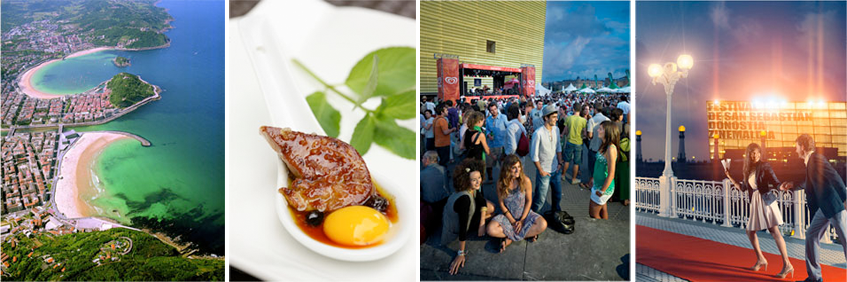 Images courtesy of San Sebastian Tourism
During their study years, BCC students will have access to the BCC Student APP. Through this APP students will be informed about grants and scholarships, job opportunities, extracurricular learning opportunities, events, invitations to exclusive Master Classes... They will also be informed on student discounts, BCC Cafeteria or Restaurant reservations, transportation, etc.